Grand Pigalle Experimental
From Cabarets to Cocktail Bars: A Hotel Near the Moulin Rouge

Grand Pigalle Experimental is a 4-star boutique hotel near the Moulin Rouge, a five-minute walk from the red windmill at 82 boulevard de Clichy. It stands at 29 rue Victor-Massé, the street where the cabaret Le Chat Noir moved in 1885, in South Pigalle (SoPi). This is how Pigalle's nights went from Belle Époque cabarets to the crafted cocktails of today.
Why did Paris nightlife begin in Pigalle?
Pigalle owes its nights to geography and to taxes. Until 1860, the village of Montmartre sat outside the Paris customs wall, so wine sold on the hill escaped the duty charged inside the city. Taverns, dance halls and open-air guinguettes multiplied at the foot of the Butte, along what are now the boulevards de Clichy and de Rochechouart.
The square and the street take their name from Jean-Baptiste Pigalle, an 18th-century sculptor. By the 1880s, though, the name stood for something else: cheap studios, artists' models, poets without a fixed address and rooms that stayed open late. Painters settled in the Nouvelle Athènes, the elegant grid of streets around Place Saint-Georges, and climbed the hill to drink. Between the two, a new kind of venue took shape: the cabaret, a room where artists performed for an audience that ate, drank and answered back.
Le Chat Noir: the cabaret that once stood on our street
Le Chat Noir opened on 18 November 1881 at 84 boulevard de Rochechouart. Its founder, Rodolphe Salis, mixed tavern, stage and literary club: he mocked his customers from the door, staged shadow-puppet plays and printed his own weekly journal. Historians often call it the first modern cabaret.
In June 1885, Salis moved Le Chat Noir to a larger house at 12 rue Victor-Massé, then called rue de Laval, a short walk down the same street as Grand Pigalle Experimental. The regulars read like a guide to the Belle Époque. Erik Satie played the piano, Claude Debussy and Paul Verlaine came to listen, and Henri de Toulouse-Lautrec sketched the room. Back on boulevard de Rochechouart, the singer Aristide Bruant took over the old premises in 1885 and opened his own cabaret, Le Mirliton.
The cabaret closed in 1897, shortly after Salis died. Its black cat survives on Théophile-Alexandre Steinlen's 1896 poster, still one of the most reproduced images of Paris. When you leave the hotel and walk along rue Victor-Massé, you follow the pavement Satie took home after his sets.
How did the Moulin Rouge make Pigalle famous?
The Moulin Rouge opened on 6 October 1889 at 82 boulevard de Clichy, in the year of the Exposition Universelle. Its founders, Joseph Oller and Charles Zidler, put a red windmill on the roof and built a dance hall where workers, artists and the well-off shared the same floor. The cabaret is considered the birthplace of the modern can-can, danced by stars such as La Goulue and Jane Avril.
Toulouse-Lautrec gave the venue its image. His first Moulin Rouge poster, in 1891, shows La Goulue mid-kick and made the cabaret known far beyond Paris. A fire destroyed the original building on 27 February 1915; it reopened in the 1920s and later welcomed Mistinguett, Édith Piaf, Josephine Baker and Maurice Chevalier.
The current revue, Féerie, has played since December 1999. From the hotel, the walk takes about five minutes: down rue Victor-Massé, across Place Pigalle and west along the boulevard. After a late show, you are back in your room before the crowds have reached the metro.
Au Lapin Agile and the bohemian Butte
Higher up, on the north side of the hill at 22 rue des Saules, Au Lapin Agile tells the other side of the story. Around 1860 the house was a tavern known as "Au rendez-vous des voleurs". In 1875 the caricaturist André Gill painted its sign, a rabbit leaping out of a saucepan, and locals started calling it "le Lapin à Gill", which became Lapin Agile.
Aristide Bruant bought the building in the early 20th century to save it from demolition. Picasso was a regular, and his 1905 painting Au Lapin Agile made the small cabaret world-famous; Modigliani, Apollinaire and Utrillo drank there too. It still runs today as an intimate cabaret where singers perform French chansons, some dating back centuries. Unlike the big revues, it feels close to what Montmartre's nights looked like in 1900.
From "Pig Alley" to SoPi: how the neighbourhood reinvented its nights
During the Second World War, American soldiers nicknamed the area "Pig Alley", and for decades Pigalle was known mostly for neon signs and strip clubs along the boulevard. The change came from the quieter streets to the south. In the 2000s, the blocks between Place Saint-Georges, rue de Douai and rue des Martyrs filled with cocktail bars, natural-wine counters and small bistros, and Parisians started calling the area SoPi, for South Pigalle.
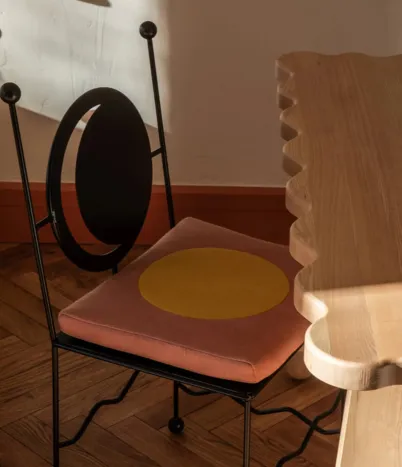
Experimental Group was part of that movement. It began in summer 2007 with the Experimental Cocktail Club, a small bar on a quiet street in Montorgueil. In spring 2015, the group opened Grand Pigalle Experimental, its very first hotel, in a six-storey Haussmann building on the corner of rue Victor-Massé and rue Henry Monnier. Designer Dorothée Meilichzon dedicated the 37 rooms to the neighbourhood's bohemian past, and the spiral staircase is carpeted in a martini-glass pattern, a nod to the group's cocktail roots.
Where to go out in South Pigalle today
SoPi's nightlife is now spread across small addresses within a few minutes of the hotel. Our team's regular recommendations:
- Frenchie Pigalle, on the hotel's ground floor: chef Greg Marchand's restaurant serves dinner every day from 6.30pm to 10.30pm, with a seasonal and playful menu.
- Les Justes, 1 rue Frochot: a cocktail bar that doubles as a small gallery for emerging artists, open from 6pm, Monday to Saturday.
- Le Bar à Bulles, 4 cité Véron: the rooftop bar of La Machine du Moulin Rouge, in the alley just beside the cabaret, open all year from Tuesday to Sunday.
- The Moulin Rouge, 82 boulevard de Clichy: the Féerie revue, five minutes on foot.
- Experimental Cocktail Club Paris: the bar where Experimental Group started in 2007, in the Montorgueil district.
Why stay at a hotel near the Moulin Rouge in SoPi?
Staying at Grand Pigalle Experimental puts the whole story within walking distance: Place Pigalle in two minutes, Pigalle metro station in four, the Moulin Rouge in five and the Sacré-Cœur in about ten. Reception is open 24 hours a day, and room service remains available after dinner time with a reduced menu, perfect for a late-night snack after a soirée!
Inside, the mood is calmer than the boulevard. Courtyard-facing Pigalle rooms (15 m²) are the quietest choice, while the Under the Eaves - Junior Suites (18 to 26 m²) on the top floor look out over Montmartre and the Sacré-Cœur. The morning after, breakfast at Frenchie Pigalle runs until 10.30am, from 7am Monday to Saturday and from 7.30am on Sunday, and Sunday brunch is served from noon to 2.30pm.
To spend a night in the heart of Pigalle's history, choose your room and book at the best available rate on the Grand Pigalle Experimental rooms and suites page.
Key Facts
- Hotel: Grand Pigalle Experimental, 4-star boutique hotel, 37 rooms, opened in spring 2015
- Address: 29 rue Victor-Massé, 75009 Paris (South Pigalle)
- Moulin Rouge: 82 boulevard de Clichy, about 5 minutes on foot, opened 6 October 1889
- Le Chat Noir: at 12 rue Victor-Massé from 1885 until 1897
- Au Lapin Agile: 22 rue des Saules, Montmartre, cabaret since the 19th century
- Frenchie Pigalle dinner: daily, 6.30pm to 10.30pm
- Reception: open 24 hours
FAQ
How far is Grand Pigalle Experimental from the Moulin Rouge?
Grand Pigalle Experimental is about a five-minute walk from the Moulin Rouge. From 29 rue Victor-Massé, walk to Place Pigalle, which takes two minutes, then follow boulevard de Clichy west to number 82. You can walk back after the late show without taking a taxi or the metro.
Where was the cabaret Le Chat Noir in Paris?
Le Chat Noir opened in 1881 at 84 boulevard de Rochechouart. In June 1885, founder Rodolphe Salis moved it to 12 rue Victor-Massé, then called rue de Laval, where it stayed until it closed in 1897. The building is on the same street as Grand Pigalle Experimental, in South Pigalle.
When did the Moulin Rouge open?
The Moulin Rouge opened on 6 October 1889, founded by Joseph Oller and Charles Zidler at 82 boulevard de Clichy. It is considered the birthplace of the modern can-can. A fire destroyed the first building in 1915, and the cabaret reopened in the 1920s. Its current revue, Féerie, has run since December 1999.
What does SoPi mean in Paris?
SoPi stands for South Pigalle, the part of the 9th arrondissement between Place Saint-Georges, rue de Douai and rue des Martyrs. Since the 2000s it has been known for cocktail bars, natural-wine restaurants and independent shops, and it is quieter than the boulevard de Clichy just to the north.
Where to eat before the Moulin Rouge show?
Frenchie Pigalle, inside Grand Pigalle Experimental, serves dinner every day from 6.30pm, five minutes on foot from the Moulin Rouge. Book an early table to finish before the evening show. Chef Greg Marchand's seasonal menu includes bacon scones and veal sweetbread nuggets. Reserve through the restaurant's page or by phone.
These articles may interest you